nuevo blog
In discussions about “replacing steel with plastic,” one critical concept is often overlooked: material performance should not be judged by absolute values alone.
The real question is not “which material is stronger,” but: under the same weight constraint, which material delivers higher load capacity and stiffness?
This is exactly where specific strength and specific stiffness become essential.
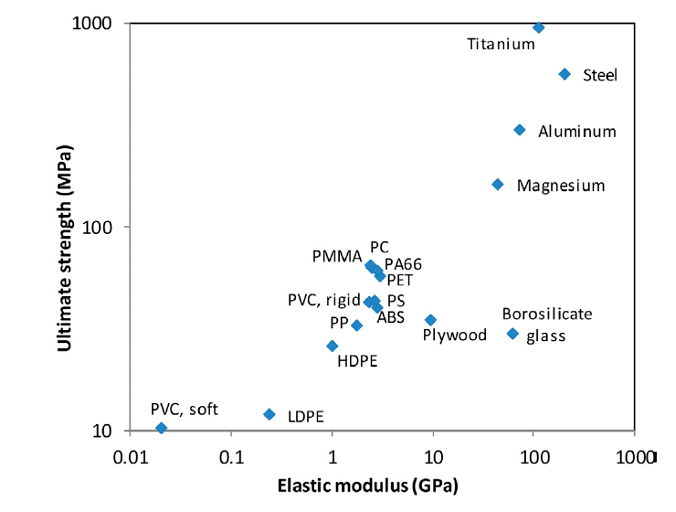
Steel typically reaches 400–1000 MPa , while engineering plastics are usually 100–200 MPa . At first glance, they seem incomparable.
However, when strength is normalized by density, the comparison changes completely.
The maximum stress a material can withstand per unit weight. It determines load-bearing capacity under the same mass.
The stiffness a material provides per unit weight. It controls deformation under load, especially in brackets, housings, and frames.
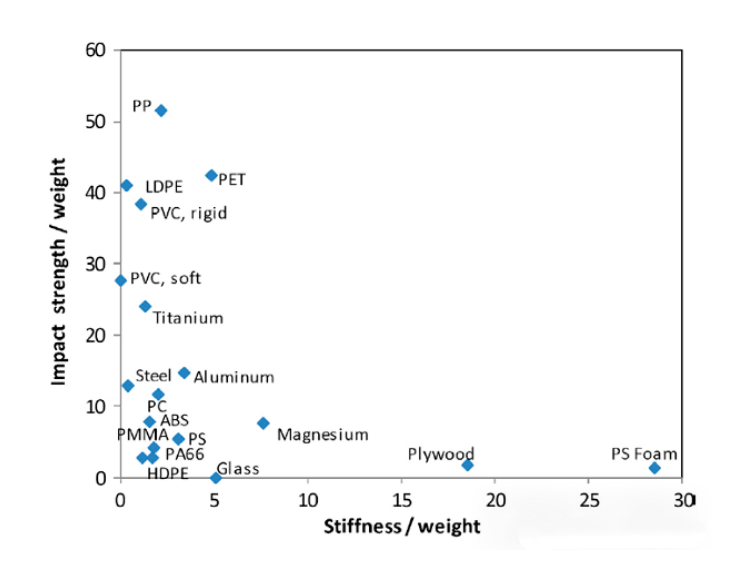
Nearly 6× volume expansion allows ribs, reinforcements, and higher moments of inertia.
Result: Comparable stiffness and strength with 60–70% weight reduction .
The essence of “plastic replacing steel” is not imitation, but achieving a better specific-performance balance under weight-constrained design.
Síguenos :


-- Obtener actualizaciones con los últimos temas

 correo electrónico
 español
 English
 français
 Deutsch
 русский
 italiano
 português
 العربية
 日本語
日本語 한국의
한국의 中文
中文