nuevo blog
Con una densidad de aproximadamente una sexta parte de la del acero, junto con propiedades autolubricantes y el potencial para reducir el ruido, el PEEK ofrece una combinación convincente de propiedades para ciertas aplicaciones de articulaciones robóticas. Sin embargo, las articulaciones principales que soportan carga en las extremidades inferiores no son necesariamente donde el PEEK funciona mejor.
El PEEK (polieteretercetona) es un termoplástico de ingeniería de alto rendimiento semicristalino con una temperatura de servicio a largo plazo de aproximadamente 240–260 °C, dependiendo del grado específico y su TDS. Cuando se refuerza con fibra de carbono (CF-PEEK), también puede ofrecer una excelente relación resistencia-peso.
Las condiciones de funcionamiento típicas de las articulaciones robóticas —que incluyen movimiento recíproco de alta frecuencia, cargas alternas de baja amplitud, carga estática prolongada y requisitos de baja vibración— se alinean bien con la combinación de propiedades del PEEK.
Entonces, ¿qué tan adecuado es PEEK para aplicaciones de articulaciones robóticas? La respuesta se reduce a tres preguntas clave: ¿Dónde encaja? ¿Dónde están sus límites? ¿Y cuánto ha progresado la tecnología?
En última instancia, la selección de materiales para articulaciones robóticas debe basarse en el espectro de carga y las condiciones de funcionamiento, en lugar de solo en la densidad.
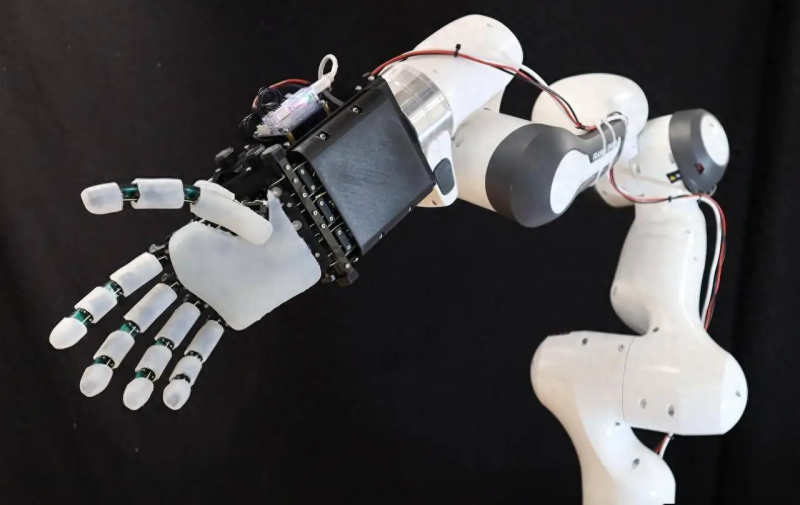
El PEEK puro tiene una densidad de aproximadamente 1.30–1.32 g/cm³, alrededor de una sexta parte de la del acero (7.85 g/cm³) y aproximadamente la mitad de la de las aleaciones de aluminio (2.70 g/cm³).
El PEEK reforzado con fibra de carbono (CF-PEEK) suele tener una densidad de aproximadamente 1.44–1.55 g/cm³, dependiendo del contenido de fibra de carbono, y sigue siendo significativamente más ligero que los metales convencionales.
Los componentes de CF-PEEK utilizados en aplicaciones de articulaciones robóticas pueden lograr reducciones de peso de aproximadamente 40–62% en comparación con las soluciones de aleación de aluminio, según datos de fabricantes divulgados públicamente.
El efecto se vuelve particularmente importante hacia el extremo distal de un brazo robótico. Debido a que la inercia rotacional es proporcional a la masa multiplicada por el cuadrado de la distancia desde el eje de rotación, reducir el peso de la muñeca y la mano diestra puede tener un impacto significativo en la dinámica general del robot.
El PEEK suele tener un coeficiente de fricción en seco de aproximadamente 0.2–0.4, dependiendo del material de la contrapieza y las condiciones de funcionamiento. Con aditivos como PTFE y grafito, el coeficiente de fricción puede reducirse a aproximadamente 0.1–0.2, mientras que la tasa de desgaste puede disminuir de uno a dos órdenes de magnitud, dependiendo del grado específico y las condiciones de prueba.
Estas características son particularmente valiosas en robótica médica, de semiconductores y de servicio doméstico, donde los requisitos de limpieza y mantenimiento pueden ser estrictos.
Sin embargo, el PEEK también tiene limitaciones. Su valor PV máximo es generalmente inferior al de los pares deslizantes metálicos, por lo que las áreas expuestas a tensiones de contacto extremadamente altas aún requieren un diseño estructural y una gestión de carga adecuados.
El PEEK tiene una amortiguación viscoelástica mayor que los metales, lo que le permite absorber parte de la energía de impacto generada durante el engrane de los engranajes y, por lo tanto, reducir la vibración y el ruido.
Los estudios publicados y los datos experimentales indican que los pares de engranajes de PEEK pueden reducir el ruido en aproximadamente 5–15 dB en comparación con los engranajes de acero de especificaciones similares. Los resultados reales dependen de la geometría del engranaje, el módulo, la carga y las condiciones de funcionamiento.
Esto es particularmente relevante para aplicaciones de colaboración humano-robot, donde los robots operan cerca de las personas y el ruido y la vibración pueden ser más notables.
Es necesario reconocer claramente una limitación: el PEEK puro solo tiene una resistencia a la fluencia moderada, y la exposición prolongada a cargas estáticas puede provocar deformación dimensional.
El refuerzo con fibra de carbono puede reducir significativamente la fluencia y mejorar la estabilidad dimensional. Esta es una razón clave por la que el PEEK reforzado con fibra de carbono (CF) es generalmente preferido para componentes de transmisión que soportan carga, donde la estabilidad dimensional a largo plazo es crítica.
Con un grado de material y un diseño estructural adecuados, los componentes pueden mantener un rendimiento estable bajo cargas prolongadas y condiciones repetidas de arranque y parada, lo que ayuda a mantener la holgura de la caja de cambios dentro de la tolerancia de montaje requerida y a minimizar la deriva de posicionamiento durante la vida útil.
El PEEK ofrece propiedades dieléctricas estables, no es magnético y no protege contra campos electromagnéticos. Estas características lo hacen adecuado para bases de aislamiento y componentes estructurales alrededor de codificadores, sensores de fuerza/par de seis ejes y otros componentes electrónicos sensibles dentro de las articulaciones robóticas.
El PEEK de grado médico también está disponible con certificaciones de biocompatibilidad y puede soportar la esterilización repetida con vapor a alta temperatura, lo que lo hace adecuado para determinados componentes de robots quirúrgicos y articulaciones robóticas en miniatura.
La resistencia interlaminar del CF-PEEK está influenciada por la orientación de la fibra, y su resistencia al impacto sin entalla puede ser inferior a la de los aceros aleados. Bajo cargas de alto par y alto impacto, los modos de falla típicos pueden incluir fractura de la raíz del diente y delaminación interlaminar.
El PEEK puro tiene una conductividad térmica de aproximadamente 0.25 W/(m·K), aproximadamente 1/600 de la de las aleaciones de aluminio. El refuerzo con fibra de carbono puede mejorar la conductividad térmica, pero el aumento sigue siendo limitado, generalmente a alrededor de 1–5 W/(m·K), dependiendo del contenido y la orientación de la fibra.
Por lo tanto, el calor generado por los motores y las cajas de cambios es difícil de disipar a través de los componentes estructurales de polímero. En las carcasas de las articulaciones cerradas, la acumulación de calor puede acelerar el envejecimiento del material y de los componentes circundantes.
Para operaciones continuas de servicio pesado, es esencial una ruta de gestión térmica eficaz, que incorpore potencialmente marcos metálicos, almohadillas térmicamente conductoras o refrigeración forzada.
Las resinas PEEK modificadas de alto rendimiento son significativamente más caras que los plásticos de ingeniería de uso general, mientras que los grados reforzados con fibra de carbono son aún más costosos. Los engranajes de precisión y los componentes de pared delgada también tienen ventanas de procesamiento de moldeo por inyección relativamente estrechas y requieren herramientas más exigentes.
En la etapa actual, el costo general de los módulos de articulación robótica de lotes pequeños puede ser, por lo tanto, más alto que el de las soluciones metálicas comparables.
A medida que aumentan los volúmenes de producción, los costos pueden seguir disminuyendo. Sin embargo, esto debe considerarse como una tendencia prospectiva más que como un hecho actual.
El PEEK puro tiene un coeficiente de expansión térmica lineal (CLTE) de aproximadamente 47–60 × 10−6/K, alrededor del doble que el del aluminio y unas cinco veces el del acero. El refuerzo con fibra de carbono puede reducir la expansión térmica, pero el valor resultante puede seguir siendo superior al de los metales.
En entornos con variaciones de temperatura significativas, la holgura de los engranajes y la precarga de los rodamientos pueden desplazarse a medida que el material se expande o contrae. Por lo tanto, los sistemas de transmisión de precisión requieren una compensación estructural adecuada, incluyendo la asignación de holguras y el emparejamiento cuidadoso de materiales diferentes.
La oportunidad para el PEEK no es necesariamente reemplazar a los metales en todos los ámbitos, sino abordar aplicaciones donde los metales enfrentan limitaciones en reducción de peso, funcionamiento silencioso y rendimiento sin mantenimiento.
Dentro de sus límites operativos, el PEEK puede ser una opción de material altamente adecuada. Más allá de esos límites, el metal sigue siendo la solución establecida para aplicaciones exigentes de soporte de carga.
Articulaciones de muñeca de robots humanoides, secciones de antebrazo, componentes de transmisión de manos diestras, efectores finales, articulaciones de eje final de robots colaborativos y articulaciones ligeras para robots médicos, de sala limpia y de servicio.
Las articulaciones primarias de servicio pesado pueden combinar un marco de soporte de carga metálico con engranajes, bujes y componentes de amortiguación de PEEK para equilibrar la resistencia mecánica y la reducción de peso.
Articulaciones primarias de robots industriales de servicio pesado, equipos sometidos a cargas de alto impacto frecuentes y articulaciones principales de soporte de carga en robots de extremidades inferiores que operan bajo alto par.
Las carcasas de CF-PEEK, los componentes relacionados con el flexspline, los retenedores y los anillos de engranajes auxiliares pueden ofrecer reducciones de peso de más del 40%, al tiempo que proporcionan beneficios en la reducción de vibraciones y ruido.
Algunos fabricantes chinos han introducido módulos de articulación robótica ligeros con alto contenido de PEEK, logrando reducciones de peso de aproximadamente 62% y avanzando hacia pruebas en robots.
Los engranajes y bujes de PEEK modificados han entrado en producción en volumen para algunos sistemas robóticos pequeños y de precisión, particularmente donde el bajo peso, la baja fricción y la estabilidad dimensional son importantes.
El PEEK se utiliza en carcasas ligeras, soportes de tope, casquillos de aislamiento, bases de aislamiento de sensores y componentes estructurales para dedos robóticos diestros.
Microarticulaciones y componentes donde son importantes las propiedades no magnéticas y la resistencia a la esterilización repetida.
Aplicaciones de semiconductores y biofarmacéuticas que requieren una baja generación de partículas y un funcionamiento sin lubricación.
Aplicaciones que requieren resistencia a la corrosión y condiciones ambientales exigentes.
Las formulaciones de materiales están evolucionando hacia sistemas de múltiples componentes que combinan fibra de carbono, grafeno y rellenos lubricantes para lograr un mejor equilibrio entre resistencia al impacto, resistencia a la fatiga y conductividad térmica.
Las arquitecturas híbridas que combinan insertos metálicos, componentes de transmisión de PEEK y vías dedicadas de gestión térmica están surgiendo como un enfoque práctico tanto para articulaciones robóticas ligeras como de servicio pesado.
Se espera que las tecnologías de fabricación como el moldeo por inyección integrado y la impresión 3D de fibra continua mejoren el rendimiento y, al mismo tiempo, reduzcan los costes de procesamiento y montaje.
Se están desarrollando gradualmente normas de ensayo que cubren la resistencia a la fatiga, el ciclo térmico y el desgaste de los componentes de articulaciones robóticas basados en PEEK. Unos métodos de ensayo fiables y estandarizados serán un requisito previo importante para la producción a gran escala.
Para las articulaciones principales que soportan carga, un enfoque práctico es utilizar metal para la estructura principal de soporte de carga, incorporando al mismo tiempo PEEK para componentes de transmisión, casquillos y elementos de amortiguación.
Por lo general, no se recomienda la sustitución completa por PEEK en aplicaciones que impliquen alto par, cargas de alto impacto o funcionamiento continuo de servicio pesado.
Si se utilizan directamente en dichos componentes, estas limitaciones pueden manifestarse finalmente como desgaste de la superficie de los dientes y deriva de la holgura, lo que podría provocar problemas de posicionamiento y precisión durante períodos de funcionamiento prolongados.
Las aplicaciones de articulaciones robóticas requieren algo más que simplemente elegir un polímero de alto rendimiento. La selección del material debe considerar el espectro de carga, la fricción y el desgaste, la temperatura de funcionamiento, la estabilidad dimensional, la gestión térmica y el método de procesamiento.
LFT-G ofrece compuestos de PEEK y PEEK reforzado con fibra de carbono para aplicaciones de ingeniería exigentes. Cuéntenos sobre su componente, las condiciones de funcionamiento y los requisitos de rendimiento, y nuestro equipo técnico podrá ayudarle a evaluar una solución de material adecuada.
Hable con nuestro equipo técnicoSíguenos :


-- Obtener actualizaciones con los últimos temas

 correo electrónico
 español
 English
 français
 Deutsch
 русский
 italiano
 português
 العربية
 日本語
日本語 한국의
한국의 中文
中文