correo electrónico
 español
 English
 français
 Deutsch
 русский
 italiano
 português
 العربية
 日本語
日本語 한국의
한국의 中文
中文


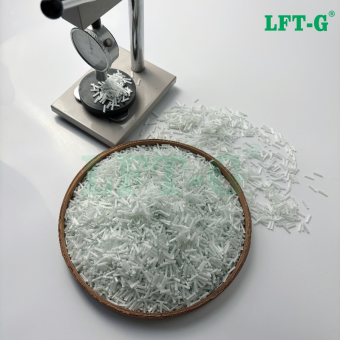
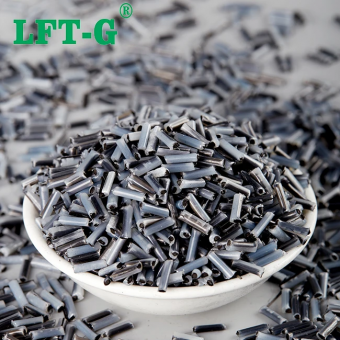
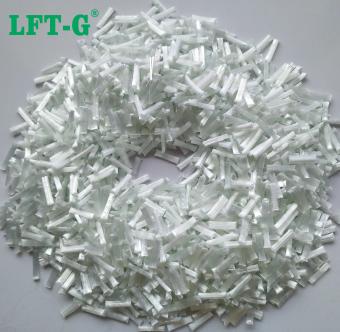
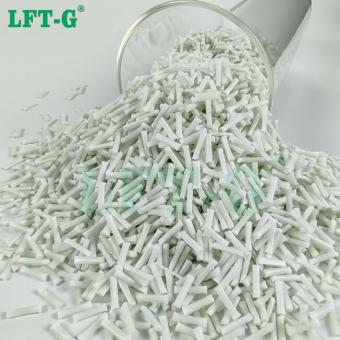
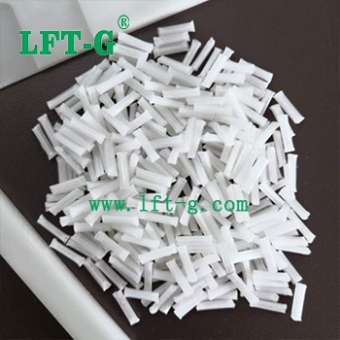
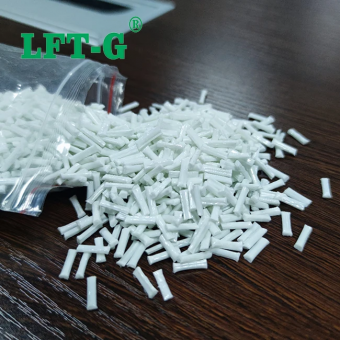
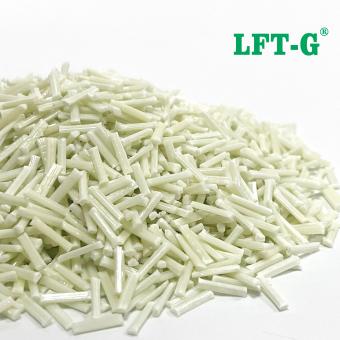
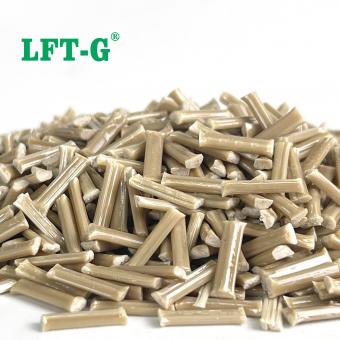
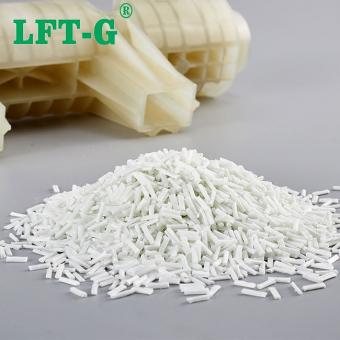
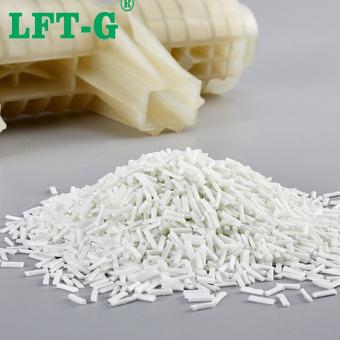
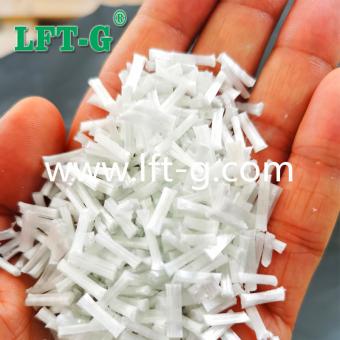
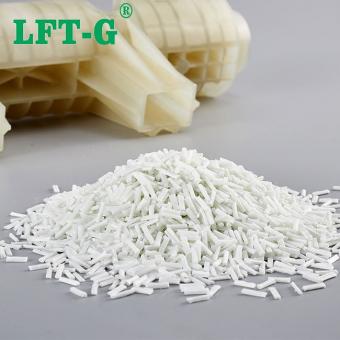
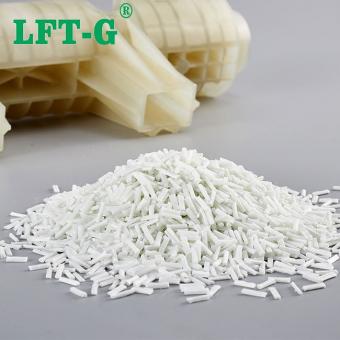
Compuesto pla de fibra de vidrio largo preparado por tecnología de impregnación por fusión. cuando la fracción de masa lgf es 30% -40%, Acido poliláctico reforzado con fibra de vidrio larga Tiene las mejores propiedades mecánicas integrales. significativamente superior a los tradicionales compuestos de pla de la misma composición.
-
LFT PLA Compuestos de ácido poliláctico rellenos de fibra de vidrio larga reciclados para ingenieríaplástico PLA El PLA es un poliéster no natural, considerado como uno de los "plásticos verdes" más prometedores debido a sus excelentes propiedades como biocompatibilidad, biodegradabilidad y alta resistencia mecánica. El PLA tiene buena degradabilidad y puede ser completamente degradado por microorganismos. Los productos fabricados con PLA pueden degradarse completamente en CO2 y agua después de su uso, y no son tóxicos ni irritantes. El PLA tiene propiedades mecánicas similares al polipropileno, mientras que su brillo, claridad y procesabilidad son similares a las del poliestireno, y su temperatura de procesamiento es más baja que la de la poliolefina. El PLA se puede procesar en diversos materiales de embalaje, fibras y telas no tejidas mediante moldeo por inyección, extrusión, ampollado, moldeo por soplado, hilado y otros métodos generales de procesamiento de plástico, y el PLA se ha utilizado ampliamente en productos de plástico desechables. Además, el PLA también se puede utilizar ampliamente en las industrias química, médica, farmacéutica y de impresión 3D. Ahora se reconoce cada vez más que los poliésteres PLA desempeñarán un papel clave en la solución del problema de la contaminación plástica. PLA plástico reinoforced La fibra de vidrio (nombre en inglés: fibra de vidrio o fibra de vidrio) es un material inorgánico no metálico con excelente rendimiento, ventajas de buen aislamiento, resistencia al calor, buena resistencia a la corrosión y alta resistencia mecánica. Uno de los principales usos de la fibra de vidrio para el refuerzo de materiales compuestos. La fibra de vidrio larga generalmente se refiere a una longitud de fibra de vidrio de más de 10 mm. El plástico PLA reforzado con fibra de vidrio larga se refiere a compuestos de PLA modificados que contienen longitudes de fibra de vidrio de 10 a 25 mm, que se forman en una estructura tridimensional con longitudes de fibra de vidrio superiores a 3,1 mm mediante moldeo por inyección y otros procesos, y se conoce como PLA de Fibra de Vidrio Larga, abreviado como LGFPLA. termoplástico reforzado con fibra). Desde la definición del material, LGFPLA es un tipo de LFT. Generalmente, son partículas columnares de 12 mm o 25 mm de longitud y unos 3 mm de diámetro. Los gránulos de aproximadamente 12 mm de longitud se utilizan principalmente para moldeo por inyección, mientras que los gránulos de aproximadamente 25 mm de longitud se utilizan principalmente para moldeo por compresión. En estos gránulos, la fibra de vidrio tiene la misma longitud que los gránulos, y el contenido de fibra de vidrio puede variar del 20% al 60%, y el color de los gránulos se puede combinar según los requisitos del cliente. LGF y SGF LFT tiene las siguientes ventajas sobre los composites termoplásticos reforzados con fibras cortas: - Mayor longitud de fibra, lo que mejora significativamente las propiedades mecánicas de los productos. - Alta rigidez específica y resistencia específica, buena resistencia al impacto, especialmente indicado para aplicaciones de piezas de automoción. - Resistencia a la fluencia mejorada, buena estabilidad dimensional y alta precisión de moldeado de piezas. - Excelente resistencia a la fatiga. - Mejor estabilidad en ambientes húmedos y de alta temperatura. - Las fibras pueden moverse relativamente en el molde de moldeo durante el proceso de moldeo, con poco daño a las fibras. Detalles Número Color Longitud Especificación de fibra Paquete Muestra Puerto de carga El tiempo de entrega PLA-NA-LGF Color natural o personalizado 6-25 mm 20%-60% 25 kg/bolsa Disponible Puerto de Xiamén 7-15 días después del envío Laboratorio y fábrica Plástico compuesto Co., Ltd. de Xiamen LFT El rápido desarrollo de la tecnología ha llevado a la aparición de compuestos de fibra de carbono LFT. Long Fiber (Xiamen) New Material Technology Co., Ltd, brinda un servicio de personalización profesional para compuestos de fibra de carbono largos reforzados modificados. Ltd. fue fundada por un veterano de la industria de compuestos reforzados termoplásticos, centrándose en el desarrollo y producción de plásticos de ingeniería termoplásticos largos reforzados con fibra de vidrio/carbono (LFT-G.LFRT,LFT). La empresa produce compuestos largos de fibra de carbono con las ventajas de peso ligero, alta resistencia, resistencia térmica de alto impacto, diseño y protección reciclable, ecológica y ambiental. En comparación con los materiales tradicionales, requiere menor costo, mejor resistencia química y a la corrosión, y mejor rendimiento de moldeado y procesamiento, lo que lo convierte en el material dorado del siglo XXI. Long Fiber (Xiamen) New Material Technology Co: Xiamen LFT composite plastic Co., Ltd. se dedica al desarrollo y producción de la serie LFRT de fibra de vidrio larga (LGF) y fibra de carbono larga (LCF) PP, PA6, PA66, PPA. , PA12, TPU, PBT, PLA, PET, PPS, PEEK y otros plásticos de ingeniería. La serie de productos se puede utilizar en la fabricación de electrodomésticos, aer...
- Plástico reforzado con PLA lgf
- Materiales modificados del molde de inyección de PLA LFT-G
- compuestos de fibra de vidrio larga resina pla básica
- Pellets de PLA de fibra larga 30
- Polímeros PLA propios
- PLA pellets puros grado virgen lft
Etiquetas :
-
Xiamen LFT Compuestos de ácido poliláctico rellenos de resina termoplástica de fibra de vidrio largaPLA El PLA (ácido poliláctico) también se conoce como ácido poliláctico, el proceso de producción de ácido poliláctico no contamina y el producto puede ser biodegradable para lograr el reciclaje en la naturaleza, por lo que es un material polimérico ecológico ideal y uno de los representantes de Plásticos biodegradables. La estructura del PLA tiene una influencia importante en su resistencia al calor, tenacidad, resistencia mecánica, degradabilidad y biocompatibilidad. La influencia sobre la resistencia al calor se analiza principalmente a continuación. Sólo hay un submetileno en la cadena principal de la molécula de PLA, la cadena molecular tiene una estructura en espiral y su actividad es pobre. Como resultado, el PLA después del moldeo por inyección casi no cristaliza debido a la lenta velocidad de cristalización, por lo que la resistencia al calor del producto es pobre. Durante el procesamiento en caliente, el enlace éster se rompe parcialmente para producir un grupo carboxilo terminal, que desempeña un efecto de degradación autocatalítica en la degradación térmica del PLA. PLA reforzado LGF La rigidez de la fibra hace que desempeñe el papel de soporte del esqueleto en la matriz polimérica. Cuando se calienta el polímero, el movimiento del segmento de la cadena se limita, mejorando así la resistencia al calor del material. En la actualidad, las fibras que se pueden utilizar para mejorar la modificación del PLA incluyen fibra vegetal natural (sisal, lino, bambú, coco, fibra de madera, etc.), fibra animal natural (seda, etc.), fibra mineral (basalto). fibra, etc.) y fibras químicas (fibra de carbono, fibra de vidrio, etc.). Entre estas fibras, la fibra de carbono y la fibra de vidrio se utilizan ampliamente por su alta resistencia y alto módulo. La fibra vegetal natural ha sido ampliamente estudiada debido a su amplia fuente, degradabilidad y propiedades térmicas y mecánicas mejoradas de los compuestos. Se mezclaron fibra natural modificada y fibra inorgánica modificada (fibra de vidrio o fibra de carbono) en la matriz de PLA para preparar dos tipos de compuestos de PLA reforzados con fibra. Los resultados de las pruebas muestran que la temperatura de reblandecimiento Vica de los compuestos supera los 140 ℃. Comparado con la fibra corta (SGF) En comparación con la fibra corta, tiene un rendimiento más excelente en propiedades mecánicas. Es más adecuado para productos grandes y piezas estructurales. Tiene entre 1 y 3 veces mayor (dureza) que la fibra corta, y la resistencia a la tracción (resistencia y rigidez) aumenta entre 0,5 y 1 veces. Moldeo por inyección Laboratorio Depósito Certificación Plástico compuesto Co., Ltd de Xiamen LFT Xiamen LFT composite plastic Co., Ltd. es una empresa de marca que se centra en LFT y LFRT. Serie de fibra de vidrio larga (LGF) y serie de fibra de carbono larga (LCF). El termoplástico LFT de la empresa se puede utilizar para moldeo por inyección y extrusión LFT-G, y también para moldeo LFT-D. Se puede producir según los requisitos del cliente: 5 ~ 25 mm de longitud. Los termoplásticos reforzados con infiltración continua de fibra larga de la empresa han pasado la certificación del sistema ISO9001 y 16949, y los productos han obtenido muchas marcas comerciales y patentes nacionales.
- Plástico compuesto PLA en lugar de metal y acero
- Materiales de ácido poliáctico Alta calidad y resistencia.
- compuestos pla modificados
- fibra de vidrio larga pla lgf fabricada en China
- relleno de fibra de vidrio larga pla fibra de vidrio larga
- lft-g pla lgf resina termoplástica virgen
Etiquetas :
-
Pellets largos de plástico LFT PLA reforzados con fibra de vidrio para moldeo por inyecciónpellets de plástico pla para productos de plástico Los pellets de pla son un tipo de materiales plásticos modificados de ingeniería de polipropileno reforzado con fibra de vidrio larga;
- Resina PLA de grado virgen puro de alta calidad
- pla gf20 pla gránulo precio termoplástico
- precio de gránulos pla por kg LGF GFRP
Etiquetas :
-
Xiamen LFT PLA compuestos de ácido poliláctico resina termoplástica de fibra de vidrio larga para ingenieríaplástico PLA PLA es un poliéster no natural, considerado como uno de los "plásticos verdes" por sus excelentes propiedades como biocompatibilidad, biodegradabilidad y alta resistencia mecánica. El PLA tiene buena degradabilidad y puede ser completamente degradado por microorganismos. Los productos hechos de PLA pueden degradarse completamente a CO2 y agua después de su uso, y no son tóxicos ni irritantes. El PLA tiene propiedades mecánicas similares al polipropileno, mientras que su brillo, claridad y procesabilidad son similares a las del poliestireno, y su temperatura de procesamiento es más baja que la de la poliolefina. El PLA se puede procesar en diversos materiales de embalaje, fibras y telas no tejidas mediante moldeo por inyección, extrusión, ampollado, moldeo por soplado, hilado y otros métodos generales de procesamiento de plástico, y el PLA se ha utilizado ampliamente en productos de plástico desechables. Además, el PLA también se puede utilizar ampliamente en las industrias química, médica, farmacéutica y de impresión 3D. Ahora se reconoce cada vez más que los poliésteres PLA desempeñarán un papel clave en la solución del problema de la contaminación plástica. PLA plástico reinoforzado La fibra de vidrio (nombre en inglés: fibra de vidrio o fibra de vidrio) es un material inorgánico no metálico con excelente rendimiento, ventajas de buen aislamiento, resistencia al calor, buena resistencia a la corrosión y alta resistencia mecánica. Uno de los principales usos de la fibra de vidrio para el refuerzo de materiales compuestos. La fibra de vidrio larga generalmente se refiere a una longitud de fibra de vidrio de más de 10 mm. El plástico PLA reforzado con fibra de vidrio larga se refiere a compuestos de PLA modificados que contienen longitudes de fibra de vidrio de 10 a 25 mm, que se forman en una estructura tridimensional con longitudes de fibra de vidrio superiores a 3,1 mm mediante moldeo por inyección y otros procesos, y se conoce como PLA de Fibra de Vidrio Larga, abreviado como LGFPLA. termoplástico reforzado con fibra). Desde la definición del material, LGFPLA es un tipo de LFT. Generalmente, son partículas columnares de 12 mm o 25 mm de longitud y unos 3 mm de diámetro. Los gránulos de aproximadamente 12 mm de longitud se utilizan principalmente para moldeo por inyección, mientras que los gránulos de aproximadamente 25 mm de longitud se utilizan principalmente para moldeo por compresión. En estos gránulos, la fibra de vidrio tiene la misma longitud que los gránulos, y el contenido de fibra de vidrio puede variar del 20% al 60%, y el color de los gránulos se puede combinar según los requisitos del cliente. LGF y SGF LFT tiene las siguientes ventajas frente a los composites termoplásticos reforzados con fibras cortas:- Mayor longitud de fibra, lo que mejora significativamente las propiedades mecánicas de los productos. - Alta rigidez específica y resistencia específica, buena resistencia al impacto, especialmente adecuado para aplicaciones de piezas de automoción.- Resistencia a la fluencia mejorada, buena estabilidad dimensional y alta precisión de moldeado de piezas.- Excelente resistencia a la fatiga.- Mejor estabilidad en altas temperaturas y ambientes húmedos.- Las fibras pueden moverse relativamente en el molde de moldeo durante el proceso de moldeo, con poco daño a la fibra. Detalles Número Color Longitud Especificación de fibra Paquete Muestra Puerto de carga El tiempo de entrega PLA-NA-LGF Color natural o personalizado 6-25 mm 20%-60% 25 kg/bolsa Disponible Puerto de Xiamén 7-15 días después del envío Laboratorio y fábrica Plástico compuesto Co., Ltd. de Xiamen LFT El rápido desarrollo de la tecnología ha llevado a la aparición de compuestos de fibra de carbono LFT. Long Fiber (Xiamen) New Material Technology Co., Ltd, ofrece un servicio de personalización profesional para compuestos de fibra de carbono largos reforzados modificados.Ltd. fue fundada por un veterano de la industria de compuestos reforzados termoplásticos, centrándose en el desarrollo y producción de plásticos de ingeniería termoplásticos largos reforzados con fibra de vidrio/carbono (LFT-G.LFRT,LFT). La empresa produce compuestos largos de fibra de carbono con las ventajas de peso ligero, alta resistencia, resistencia térmica de alto impacto, diseño y protección reciclable, ecológica y ambiental. En comparación con los materiales tradicionales, requiere menor costo, mejor resistencia a la corrosión y a los productos químicos, y un mejor rendimiento de moldeado y procesamiento, lo que lo convierte en el material dorado del siglo XXI.Nueva tecnología de materiales de fibra larga (Xiamen) Co:Xiamen LFT composite plastic Co., Ltd. se dedica al desarrollo y producción de series LFRT de fibra de vidrio larga (LGF) y fibra de carbono larga (LCF) PP, PA6, PA66, PPA, PA12, TPU, PBT, PLA, PET, PPS, PEEK y otros plásticos de ingeniería.La serie de productos se puede utilizar en la fabricación de electrodomésticos, aeroespaciales,...
- Pla de producción de lgf de plástico reforzado con PLA
- Pellets de PLA de fibra larga 30 fabricados en China
- Venta directa del fabricante de polímeros PLA de propiedad propia
Etiquetas :
-
LFT-G PLA Relleno de ácido poliláctico, resina termoplástica larga de fibra de vidrio, color original para piezas de automóviles¿Qué es el material PLA? El ácido poliláctico (PLA) es un nuevo material biodegradable renovable y de base biológica elaborado a partir de almidón extraído de recursos vegetales renovables como el maíz y la mandioca. Materias primas de almidón mediante sacarificación para obtener glucosa, y luego a partir de la glucosa y una determinada fermentación de cepa en ácido láctico de alta pureza, y luego mediante la síntesis química de un cierto peso molecular de ácido poliláctico, la cadena de polimerización es la siguiente. Almidón (refinado) -- - > glucosa (fermentación) -- - > ácido láctico (cíclico) -- - > lactida (polimerización) -- - > el PLA El PLA es el "plástico verde" con mayor potencial de desarrollo en el siglo XXI. Tiene buenas propiedades mecánicas y transparencia, pero sus deficiencias, como la lenta velocidad de cristalización y la escasa resistencia al calor, limitan su popularización y uso. Por lo tanto, a menudo se utiliza algún método de endurecimiento para mejorar su rendimiento, pero a expensas de la transparencia o del proceso complejo. ¿Qué es el material PLA LGF? La rigidez de la fibra hace que desempeñe el papel de soporte del esqueleto en la matriz polimérica. Cuando se calienta el polímero, el movimiento del segmento de cadena se limita, mejorando así la resistencia al calor del material. En la actualidad, se pueden utilizar fibra de carbono y fibra de vidrio para mejorar la modificación del PLA. Entre estas fibras, la fibra de carbono y la fibra de vidrio se utilizan ampliamente debido a su alta resistencia y módulo. El material compuesto se preparó añadiendo fibra al PLA. Después del tratamiento térmico, el efecto de modificación del material compuesto fue el mejor y la temperatura de resistencia al calor aumentó en casi 40 ℃ en comparación con la del PLA puro. Se pueden añadir dos o más materiales con efecto sinérgico al mismo tiempo para mejorar el rendimiento térmico del PLA. Los resultados de las pruebas muestran que la temperatura de reblandecimiento Vica de los compuestos supera los 140 ℃. Proceso de producción Detalles Otros productos que quizás te preguntes PP-LGF PA6-LGF TPU-LGF Preguntas frecuentes P. ¿La inyección de fibra de vidrio larga y fibra de carbono larga tiene requisitos especiales para las máquinas y moldes de moldeo por inyección? R. Ciertamente existen requisitos. Especialmente desde la estructura de diseño del producto, así como la boquilla de tornillo de la máquina de moldeo por inyección y el proceso de moldeo por inyección de la estructura del molde, se deben considerar los requisitos de la fibra larga. P. El producto es fácil de quebradizo, por lo que cambiar al uso de materiales termoplásticos reforzados con fibra larga puede resolver este problema. A. Se deben mejorar las propiedades mecánicas generales. Las características de la fibra de vidrio larga y la fibra de carbono larga son las ventajas en las propiedades mecánicas. Tiene entre 1 y 3 veces mayor (dureza) que la fibra corta, y la resistencia a la tracción (resistencia y rigidez) aumenta entre 0,5 y 1 veces. P. Cuando un cliente quiere desarrollar un nuevo producto, ¿cómo recomendarle el material y las características adecuadas? R. Es necesario comprender los requisitos técnicos del cliente, el entorno de uso, las condiciones de prueba para el nuevo producto y recomendar el modelo de acuerdo con los distintos tipos de características del sustrato de resina de fibra larga.
- fibra de vidrio larga Ácido poliláctico
- Materiales LFT Materiales verdes PLA
- PLA GF30 debido a fábrica
Etiquetas :
-
Ácido poliláctico Xiamen LFT-G PLA, relleno de fibra de vidrio larga, color original termoplástico¿Qué es el material PLA? El ácido poliláctico (PLA) es un nuevo material biodegradable renovable y de base biológica elaborado a partir de almidón extraído de recursos vegetales renovables como el maíz y la mandioca. Materias primas de almidón mediante sacarificación para obtener glucosa, y luego a partir de la glucosa y una determinada fermentación de cepa en ácido láctico de alta pureza, y luego mediante la síntesis química de un cierto peso molecular de ácido poliláctico, la cadena de polimerización es la siguiente. Almidón (refinado) -- - > glucosa (fermentación) -- - > ácido láctico (cíclico) -- - > lactida (polimerización) -- - > el PLA El PLA es el "plástico verde" con mayor potencial de desarrollo en el siglo XXI. Tiene buenas propiedades mecánicas y transparencia, pero sus deficiencias, como la lenta velocidad de cristalización y la escasa resistencia al calor, limitan su popularización y uso. Por lo tanto, a menudo se utiliza algún método de endurecimiento para mejorar su rendimiento, pero a expensas de la transparencia o del proceso complejo. ¿Qué es el material PLA LGF? La rigidez de la fibra hace que desempeñe el papel de soporte del esqueleto en la matriz polimérica. Cuando se calienta el polímero, el movimiento del segmento de cadena se limita, mejorando así la resistencia al calor del material. En la actualidad, se pueden utilizar fibra de carbono y fibra de vidrio para mejorar la modificación del PLA. Entre estas fibras, la fibra de carbono y la fibra de vidrio se utilizan ampliamente debido a su alta resistencia y módulo. El material compuesto se preparó añadiendo fibra al PLA. Después del tratamiento térmico, el efecto de modificación del material compuesto fue el mejor y la temperatura de resistencia al calor aumentó en casi 40 ℃ en comparación con la del PLA puro. Se pueden añadir dos o más materiales con efecto sinérgico al mismo tiempo para mejorar el rendimiento térmico del PLA. Los resultados de las pruebas muestran que la temperatura de reblandecimiento Vica de los compuestos supera los 140 ℃. Proceso de producción Detalles Otros productos que quizás te preguntes PP-LGF PA6-LGF TPU-LGF Preguntas frecuentes P. ¿La inyección de fibra de vidrio larga y fibra de carbono larga tiene requisitos especiales para las máquinas y moldes de moldeo por inyección? R. Ciertamente existen requisitos. Especialmente desde la estructura de diseño del producto, así como la boquilla de tornillo de la máquina de moldeo por inyección y el proceso de moldeo por inyección de la estructura del molde, se deben considerar los requisitos de la fibra larga. P. El producto es fácil de quebradizo, por lo que cambiar al uso de materiales termoplásticos reforzados con fibra larga puede resolver este problema. A. Se deben mejorar las propiedades mecánicas generales. Las características de la fibra de vidrio larga y la fibra de carbono larga son las ventajas en las propiedades mecánicas. Tiene entre 1 y 3 veces mayor (dureza) que la fibra corta, y la resistencia a la tracción (resistencia y rigidez) aumenta entre 0,5 y 1 veces. P. Cuando un cliente quiere desarrollar un nuevo producto, ¿cómo recomendarle el material y las características adecuadas? R. Es necesario comprender los requisitos técnicos del cliente, el entorno de uso, las condiciones de prueba para el nuevo producto y recomendar el modelo de acuerdo con los distintos tipos de características del sustrato de resina de fibra larga.
- Compuestos de PLA para moldeo por inyección LGF
- Los materiales verdes PLA GF se pueden reciclar
- compuesto de filamento pla relleno de vidrio de alta rigidez
- pla relleno de vidrio de alto rendimiento
- Fabricado en electrodomésticos de fábrica propia de China.
Etiquetas :
-
LFT-G PLA Termoplástico de fibra de vidrio larga compuesto de ácido poliláctico color originalPLA El PLA (ácido poliláctico) también se conoce como ácido poliláctico, el proceso de producción de ácido poliláctico no contamina y el producto puede ser biodegradable para lograr el reciclaje en la naturaleza, por lo que es un material polimérico ecológico ideal y uno de los representantes de Plásticos biodegradables. La estructura del PLA tiene una influencia importante en su resistencia al calor, tenacidad, resistencia mecánica, degradabilidad y biocompatibilidad. La influencia sobre la resistencia al calor se analiza principalmente a continuación. Sólo hay un submetileno en la cadena principal de la molécula de PLA, la cadena molecular tiene una estructura en espiral y su actividad es pobre. Como resultado, el PLA después del moldeo por inyección casi no cristaliza debido a la lenta velocidad de cristalización, por lo que la resistencia al calor del producto es pobre. Durante el procesamiento en caliente, el enlace éster se rompe parcialmente para producir un grupo carboxilo terminal, que desempeña un efecto de degradación autocatalítica en la degradación térmica del PLA. PLA reforzado LGF La rigidez de la fibra hace que desempeñe el papel de soporte del esqueleto en la matriz polimérica. Cuando se calienta el polímero, el movimiento del segmento de la cadena se limita, mejorando así la resistencia al calor del material. En la actualidad, las fibras que se pueden utilizar para mejorar la modificación del PLA incluyen fibra vegetal natural (sisal, lino, bambú, coco, fibra de madera, etc.), fibra animal natural (seda, etc.), fibra mineral (basalto). fibra, etc.) y fibras químicas (fibra de carbono, fibra de vidrio, etc.). Entre estas fibras, la fibra de carbono y la fibra de vidrio se utilizan ampliamente por su alta resistencia y alto módulo. La fibra vegetal natural ha sido ampliamente estudiada debido a su amplia fuente, degradabilidad y propiedades térmicas y mecánicas mejoradas de los compuestos. Se mezclaron fibra natural modificada y fibra inorgánica modificada (fibra de vidrio o fibra de carbono) en la matriz de PLA para preparar dos tipos de compuestos de PLA reforzados con fibra. Los resultados de las pruebas muestran que la temperatura de reblandecimiento Vica de los compuestos supera los 140 ℃. Comparado con la fibra corta (SGF) En comparación con la fibra corta, tiene un rendimiento más excelente en propiedades mecánicas. Es más adecuado para productos grandes y piezas estructurales. Tiene entre 1 y 3 veces mayor (dureza) que la fibra corta, y la resistencia a la tracción (resistencia y rigidez) aumenta entre 0,5 y 1 veces. Moldeo por inyección Laboratorio Depósito Certificación Plástico compuesto Co., Ltd de Xiamen LFT Xiamen LFT composite plastic Co., Ltd. es una empresa de marca que se centra en LFT y LFRT. Serie de fibra de vidrio larga (LGF) y serie de fibra de carbono larga (LCF). El termoplástico LFT de la empresa se puede utilizar para moldeo por inyección y extrusión LFT-G, y también para moldeo LFT-D. Se puede producir según los requisitos del cliente: 5 ~ 25 mm de longitud. Los termoplásticos reforzados con infiltración continua de fibra larga de la empresa han pasado la certificación del sistema ISO9001 y 16949, y los productos han obtenido muchas marcas comerciales y patentes nacionales.
- Plástico compuesto PLA
- materiales de ácido poliáctico
- pla fibra de vidrio larga lgf
- relleno largo de fibra de vidrio
- lft-g pla lgf
Etiquetas :
-
Xiamen LFT-G PLA compuesto de ácido poliláctico, relleno de fibra de vidrio larga, resina termoplástica, color originalPLA El PLA (ácido poliláctico) también se conoce como ácido poliláctico, el proceso de producción de ácido poliláctico no contamina y el producto puede ser biodegradable para lograr el reciclaje en la naturaleza, por lo que es un material polimérico ecológico ideal y uno de los representantes de Plásticos biodegradables. La estructura del PLA tiene una influencia importante en su resistencia al calor, tenacidad, resistencia mecánica, degradabilidad y biocompatibilidad. La influencia sobre la resistencia al calor se analiza principalmente a continuación. Sólo hay un submetileno en la cadena principal de la molécula de PLA, la cadena molecular tiene una estructura en espiral y su actividad es pobre. Como resultado, el PLA después del moldeo por inyección casi no cristaliza debido a la lenta velocidad de cristalización, por lo que la resistencia al calor del producto es pobre. Durante el procesamiento en caliente, el enlace éster se rompe parcialmente para producir un grupo carboxilo terminal, que desempeña un efecto de degradación autocatalítica en la degradación térmica del PLA. PLA reforzado LGF La rigidez de la fibra hace que desempeñe el papel de soporte del esqueleto en la matriz polimérica. Cuando se calienta el polímero, el movimiento del segmento de la cadena se limita, mejorando así la resistencia al calor del material. En la actualidad, las fibras que se pueden utilizar para mejorar la modificación del PLA incluyen fibra vegetal natural (sisal, lino, bambú, coco, fibra de madera, etc.), fibra animal natural (seda, etc.), fibra mineral (basalto). fibra, etc.) y fibras químicas (fibra de carbono, fibra de vidrio, etc.). Entre estas fibras, la fibra de carbono y la fibra de vidrio se utilizan ampliamente por su alta resistencia y alto módulo. La fibra vegetal natural ha sido ampliamente estudiada debido a su amplia fuente, degradabilidad y propiedades térmicas y mecánicas mejoradas de los compuestos. Se mezclaron fibra natural modificada y fibra inorgánica modificada (fibra de vidrio o fibra de carbono) en la matriz de PLA para preparar dos tipos de compuestos de PLA reforzados con fibra. Los resultados de las pruebas muestran que la temperatura de reblandecimiento Vica de los compuestos supera los 140 ℃. Comparado con la fibra corta (SGF) En comparación con la fibra corta, tiene un rendimiento más excelente en propiedades mecánicas. Es más adecuado para productos grandes y piezas estructurales. Tiene entre 1 y 3 veces mayor (dureza) que la fibra corta, y la resistencia a la tracción (resistencia y rigidez) aumenta entre 0,5 y 1 veces. Moldeo por inyección Laboratorio Depósito Certificación Plástico compuesto Co., Ltd de Xiamen LFT Xiamen LFT composite plastic Co., Ltd. es una empresa de marca que se centra en LFT y LFRT. Serie de fibra de vidrio larga (LGF) y serie de fibra de carbono larga (LCF). El termoplástico LFT de la empresa se puede utilizar para moldeo por inyección y extrusión LFT-G, y también para moldeo LFT-D. Se puede producir según los requisitos del cliente: 5 ~ 25 mm de longitud. Los termoplásticos reforzados con infiltración continua de fibra larga de la empresa han pasado la certificación del sistema ISO9001 y 16949, y los productos han obtenido muchas marcas comerciales y patentes nacionales.
- El plástico compuesto PLA se puede reciclar
- moldeo por inyección de materiales de ácido poliáctico
- resina plástica reforzada con fibra de vidrio larga pla
- Muestra de pla de relleno de fibra de vidrio larga disponible
- lft-g pla lgf baja deformación
Etiquetas :
-
LFT-G PLA Compuestos de ácido poliláctico resina termoplástica de fibra de vidrio larga color original reciclado para ingenieríaPLA plastico El PLA es un poliéster no natural, que se considera uno de los "plásticos verdes" más prometedores debido a sus excelentes propiedades como biocompatibilidad, biodegradabilidad y alta resistencia mecánica. PLA tiene buena degradabilidad y puede ser completamente degradado por microorganismos. Los productos hechos de PLA pueden degradarse completamente a CO2 y agua después de su uso, y no son tóxicos ni irritantes. El PLA tiene propiedades mecánicas similares al polipropileno, mientras que su brillo, claridad y procesabilidad son similares al poliestireno, y su temperatura de procesamiento es más baja que la de la poliolefina. El PLA se puede procesar en diversos materiales de embalaje, fibras y telas no tejidas mediante moldeo por inyección, extrusión, formación de ampollas, moldeo por soplado, hilado y otros métodos generales de procesamiento de plásticos, y el PLA se ha utilizado ampliamente en productos de plástico desechables. Además, el PLA también se puede utilizar ampliamente en las industrias química, médica, farmacéutica y de impresión 3D. Ahora se reconoce cada vez más que los poliésteres PLA desempeñarán un papel clave en la solución del problema de la contaminación plástica. PLA plástico forzado reino La fibra de vidrio (nombre en inglés: fibra de vidrio o fibra de vidrio) es un material inorgánico no metálico con un excelente rendimiento, las ventajas de un buen aislamiento, resistencia al calor, buena resistencia a la corrosión y alta resistencia mecánica. Uno de los principales usos de la fibra de vidrio para el refuerzo de materiales compuestos. La fibra de vidrio larga generalmente se refiere a la longitud de más de 10 mm de fibra de vidrio. El plástico PLA reforzado con fibra de vidrio larga se refiere a compuestos de PLA modificados que contienen longitudes de fibra de vidrio de 10 a 25 mm, que se forman en una estructura tridimensional con longitudes de fibra de vidrio superiores a 3,1 mm mediante moldeo por inyección y otros procesos, y se denominan PLA de fibra de vidrio larga, abreviado como LGFPLA. termoplástico reforzado con fibra). Desde la definición material, LGFPLA es una especie de LFT. Generalmente, son partículas columnares de 12 mm o 25 mm de longitud y unos 3 mm de diámetro. Los gránulos de aproximadamente 12 mm de longitud se utilizan principalmente para el moldeo por inyección, mientras que los gránulos de aproximadamente 25 mm de longitud se utilizan principalmente para el moldeo por compresión. En estos gránulos, la fibra de vidrio tiene la misma longitud que los gránulos, y el contenido de fibra de vidrio puede variar del 20 % al 60 %, y el color de los gránulos se puede combinar según los requisitos del cliente. LGF y SGF LFT tiene las siguientes ventajas sobre los compuestos termoplásticos reforzados con fibra corta: - Mayor longitud de fibra, lo que mejora significativamente las propiedades mecánicas de los productos. - Alta rigidez específica y resistencia específica, buena resistencia al impacto, especialmente adecuado para aplicaciones de piezas de automóviles. - Resistencia a la fluencia mejorada, buena estabilidad dimensional y alta precisión de moldeo de piezas. - Excelente resistencia a la fatiga. - Mejor estabilidad en ambientes húmedos y de alta temperatura. - Las fibras pueden moverse relativamente en el molde de moldeo durante el proceso de moldeo, con poco daño a las fibras. Detalles Número Color Longitud Especificación de fibra Paquete Muestra Puerto de carga El tiempo de entrega PLA-NA-LGF Color natural o personalizado 6-25 mm 20%-60% 25kg/bolsa Disponible Puerto de Xiamen 7-15 días después del envío laboratorio y fábrica Xiamen LFT plástico compuesto Co., Ltd. El rápido desarrollo de la tecnología ha llevado a la aparición de compuestos de fibra de carbono LFT. Long Fiber (Xiamen) New Material Technology Co., Ltd, brinda un servicio de personalización profesional para compuestos de fibra de carbono larga reforzada modificada. Ltd. fue fundada por un veterano de la industria de compuestos reforzados con termoplásticos, centrándose en el desarrollo y la producción de (LFT-G.LFRT,LFT) plásticos de ingeniería termoplásticos reforzados con fibra de carbono/vidrio largo. La compañía produce compuestos de fibra de carbono largos con las ventajas de peso ligero, alta resistencia, resistencia térmica de alto impacto, diseño y protección reciclable, verde y ambiental. En comparación con los materiales tradicionales, requiere un menor costo, mejor resistencia química y a la corrosión, y un mejor rendimiento de moldeo y procesamiento, lo que lo convierte en el material de oro del siglo XXI. Fibra larga (Xiamen) New Material Technology Co: Xiamen LFT composite plastic Co., Ltd. se dedica al desarrollo y producción de la serie LFRT de fibra de vidrio larga (LGF) y fibra de carbono larga (LCF) PP, PA6, PA66, PPA, PA12, TPU, PBT, PLA, PET , PPS, PEEK y otros plásticos de ingeniería. La serie de productos se puede utilizar en la fabricación de electrodomé...ver más
-
Los materiales verdes del PLA del ácido poliláctico de la marca LFT-G rellenan el moldeo por inyección de fibra de vidrio largo de alto rendimientoPLA plastico El ácido poliláctico (PLA) es un tipo de excelente material biodegradable, que se produce principalmente a partir de almidón de recursos vegetales renovables (p. ej., maíz, patata), y se utiliza ampliamente en los campos de embalaje, agricultura, vajillas, artículos médicos y no tejidos diarios. materiales debido a sus buenas propiedades de procesamiento, propiedades físicas, propiedades mecánicas, biocompatibilidad y biodegradabilidad. La investigación en la preparación de materiales compuestos multifuncionales con PLA como matriz principal es el punto caliente actual en el desarrollo de materiales degradables. fibra de vidrio larga PLA can be processed in the same way as ordinary polymers, such as extrusion, cast molding, film blowing, injection molding, bottle blowing and fiber molding. The prepared films, sheets and fibers can be used in a wide range of applications such as garments, textiles, non-woven fabrics, packaging, agriculture, forestry, civil engineering and construction, medical and hygiene products, and daily necessities after secondary processing such as overheating and spinning. PLA products can be recycled by organic resources, physical recycling, landfill, thermal recycling or chemical recycling after use. Long glass fiber reinforced composites can solve your problems when other methods of reinforced plastics do not provide the performance you need or if you want to replace metal with plastic. Long glass fiber reinforced composites can cost effectively reduce the cost of goods and effectively improve the mechanical properties of engineering polymers, and increase the durability by forming long fibers to form a long-fiber-reinforced internal skeleton network. Performance is preserved in a wide range of environments. While bio-based polylactic acid (PLA) thermoplastics are relatively eco-friendly and easy to recycle, composite materials, such as fiberglass, are much stronger. Now, we can combine the benefits of both with new PLA composites. PLA-LGF display Product process Certifications Quality Management System ISO9001/1949 Certification National Laboratory Accreditation Certificate Modified Plastics Innovation Enterprise Honorary Certificate Heavy metal REACH & ROHS testing About us Xiamen LFT composite plastic Co., Ltd is a brand-name company that focuses on LFT&LFRT. Long Glass Fiber Series (LGF) & Long Carbon Fiber Series (LCF). The company's thermoplastic LFT can be used for LFT-G injection molding and extrusion, and can also be used for LFT-D molding. It can be produced according to customer requirements: 5~25mm in length. The company's continuous infiltration reinforced thermoplastics have passed ISO9001&16949 system certification, and the products have obtained lots of national trademarks and patents. Frequently asked questions Q. How to choose the reinforcement method and length of the material when using long fiber reinforced thermoplastic material? A. The selection of materials depend on the requirements of the products. It is necessary to access how much the content is enhanced and how much length is more appropriate, which are depending on the performance requirements of the products. Q. Under what circumstances can long fiber replace short fiber? What are the common alternative materials? A. Traditional staple fiber materials can be replaced with long glass fiber and long carbon fiber LFT materials in the case of customers whose mechanical properties cannot be met or where higher metal substitutes are desired. For example, PP long glass fiber is often replacing nylon reinforced glass fiber, and nylon long glass fiber is replacing PPS series. Q. Are there any special process requirements of long carbon fiber for the injection molding products? A. We must consider the requirements of long carbon fiber for the injection molding machine screw nozzle, mold structure and injection molding process. Long carbon fiber is a relatively high cost material, and need to evaluate the cost of performance problem in the selection process.
- termoplásticos reforzados con fibras largas
- compuestos de fibra larga pla
- pla lgf30
- gránulos pla compuestos de fibra larga
- placa larga reforzada con fibra de vidrio
- compuesto LFT
Etiquetas :
-
LFT-G PLA relleno de ácido poliláctico resina termoplástica de fibra de vidrio larga color original para piezas de automóvilesWhat is PLA material? Polylactic acid (PLA) is a new bio-based and renewable biodegradable material made from starch extracted from renewable plant resources such as maize and cassava. Starch raw materials through saccharification to obtain glucose, and then from the glucose and a certain strain fermentation into high purity lactic acid, and then through chemical synthesis of a certain molecular weight of polylactic acid, the polymerization chain is as follows. Starch (refined) -- - > glucose (fermentation) -- - > lactic acid (cyclic) -- - > lactide (polymerization) -- - > the PLA PLA is the "green plastic" with the greatest development potential in the 21st century. It has good mechanical properties and transparency, but its shortcomings such as slow crystallization rate and poor heat resistance limit its popularization and use. Therefore, some toughening method is often used to enhance its performance, but at the expense of transparency or complex process. What is PLA LGF material? The rigidity of the fiber makes it play the role of skeleton support in the polymer matrix. When the polymer is heated, the movement of the chain segment is limited, thus improving the heat resistance of the material At present, carbon fiber and glass fiber can be used to enhance the modification of PLA. Among these fibers, carbon fiber and glass fiber are widely used because of their high strength and modulus. El material compuesto se preparó agregando fibra a PLA. Después del tratamiento térmico, el efecto de modificación del material compuesto fue el mejor y la temperatura de resistencia al calor aumentó casi 40 ℃ en comparación con la del PLA puro. Se pueden agregar dos o más materiales con efecto sinérgico al mismo tiempo para mejorar el rendimiento térmico del PLA. Los resultados de las pruebas muestran que la temperatura de reblandecimiento Vica de los compuestos supera los 140 ℃. Proceso de producción Detalles Otros productos que quizás te preguntes PP-LGF PA6-LGF TPU-LGF Preguntas frecuentes P. ¿La inyección de fibra de vidrio larga y fibra de carbono larga tiene requisitos especiales para las máquinas y moldes de moldeo por inyección? R. Ciertamente hay requisitos. Especialmente desde la estructura del diseño del producto, así como la boquilla del tornillo de la máquina de moldeo por inyección y el proceso de moldeo por inyección de la estructura del molde, se deben considerar los requisitos de fibra larga. P. El producto es fácil de quebrarse, por lo que cambiar para usar materiales termoplásticos reforzados con fibra larga puede resolver este problema. A. Las propiedades mecánicas generales deben mejorarse. Las características de la fibra de vidrio larga y la fibra de carbono larga son las ventajas en las propiedades mecánicas. Tiene de 1 a 3 veces mayor (dureza) que la fibra corta, y la resistencia a la tracción (resistencia y rigidez) aumenta de 0,5 a 1 veces. P. Cuando un cliente quiere desarrollar un nuevo producto, ¿cómo recomendar a los clientes el material y las características adecuadas? A. Es necesario comprender los requisitos técnicos del cliente, el entorno de uso, las condiciones de prueba para el nuevo producto y recomendar el modelo de acuerdo con varios tipos de características del sustrato de resina de fibra larga.ver más
-
LFT-G PLA resina termoplástica de fibra de vidrio larga compuesta de ácido poliláctico color originalPLA El PLA (ácido poliláctico) también se conoce como ácido poliláctico, el proceso de producción de ácido poliláctico está libre de contaminación y el producto puede ser biodegradable para lograr el reciclaje en la naturaleza, por lo que es un material de polímero verde ideal y uno de los representantes de plásticos biodegradables. La estructura del PLA tiene una influencia importante en su resistencia al calor, tenacidad, resistencia mecánica, degradabilidad y biocompatibilidad. La influencia sobre la resistencia al calor se analiza principalmente a continuación. Solo hay un submetileno en la cadena principal de la molécula de PLA, la cadena molecular tiene una estructura en espiral y su actividad es deficiente. Como resultado, el PLA después del moldeo por inyección casi no cristaliza debido a la lenta velocidad de cristalización, por lo que la resistencia al calor del producto es deficiente. Durante el procesamiento en caliente, el enlace éster se rompe parcialmente para producir un grupo carboxilo terminal, que tiene un efecto de degradación autocatalítica en la degradación térmica del PLA. PLA reforzado con LGF The rigidity of the fiber makes it play the role of skeleton support in the polymer matrix. When the polymer is heated, the movement of the chain segment is limited, thus improving the heat resistance of the material. At present, the fibers that can be used for enhancement modification of PLA include natural plant fiber (sisal, flax, linen, bamboo, coconut, wood fiber, etc.), natural animal fiber (silk, etc.), mineral fiber (basalt fiber, etc.), and chemical fiber (carbon fiber, glass fiber, etc.). Among these fibers, carbon fiber and glass fiber are widely used for their high strength and high modulus. Natural plant fiber has been widely studied because of its wide source, degradability and improved thermal and mechanical properties of composites. Modified natural fiber and modified inorganic fiber (glass fiber or carbon fiber) were mixed into the PLA matrix to prepare two kinds of fiber reinforced PLA composites. The test results show that the Vica softening temperature of the composites exceeds 140℃. Compared with Short fiber(SGF) Compared with the short fiber, it has more excellent performance in mechanical properties. It is more suitable for large products and structural parts. It has 1-3 times higher (toughness) than short fiber, and the tensile strength (strength and rigidity) is increased by 0.5-1 times. Injection molding Lab Warehouse Certification Xiamen LFT composite plastic Co., Ltd Xiamen LFT composite plastic Co., Ltd. es una empresa de marca que se enfoca en LFT y LFRT. Serie de fibra de vidrio larga (LGF) y serie de fibra de carbono larga (LCF). El termoplástico LFT de la compañía se puede usar para moldeo por inyección y extrusión LFT-G, y también se puede usar para moldeo LFT-D. Se puede producir de acuerdo con los requisitos del cliente: 5~25 mm de longitud. Los termoplásticos reforzados con infiltración continua de fibra larga de la compañía han pasado la certificación del sistema ISO9001 y 16949, y los productos han obtenido muchas marcas comerciales y patentes nacionales.ver más