
 correo electrónico
 español
 English
 français
 Deutsch
 русский
 italiano
 português
 العربية
 日本語
日本語 한국의
한국의 中文
中文


T1200 Carbon Fiber — Redefining the “Black Gold” of Advanced Manufacturing
There is a material often referred to as “black gold.”
A bundle of this material, roughly the thickness of a finger, can withstand enormous tensile loads—even enough to lift a large aircraft.
This is not science fiction. It is the reality of T1200-grade carbon fiber, one of the most advanced high-strength carbon fiber materials available today.
So, what makes T1200 carbon fiber so special?
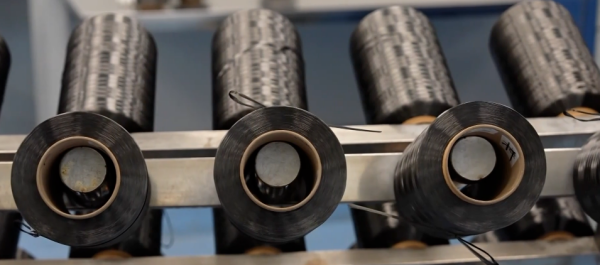
What Is T1200 Carbon Fiber?
T1200 is not simply a random product code. It refers to a strength grade of carbon fiber. In general, the higher the number following the “T,” the higher the tensile strength of the fiber.
Before T1200, grades such as T300, T700, and T800 had already become widely known. These carbon fibers have been used in a wide range of applications, including fishing rods, badminton rackets, bicycles, automotive components, and aerospace structures.
T1200-grade carbon fiber takes this performance to an even higher level.
Its tensile strength can exceed 8,000 MPa. Individual filaments are only a few micrometers in diameter—less than one-tenth the diameter of a human hair.
At the same time, carbon fiber has a much lower density than conventional steel while offering an exceptionally high strength-to-weight ratio.
This combination of high strength and low weight is what makes carbon fiber so valuable for advanced structural applications.
But strength is not its only advantage.
Carbon fiber also offers excellent environmental resistance. When properly designed as part of a composite material system, it can perform reliably under demanding temperature and environmental conditions.
Unlike conventional steel, carbon fiber itself does not rust or undergo the same type of electrochemical corrosion. This makes carbon fiber composites particularly attractive for certain applications exposed to moisture, chemicals, marine environments, and other corrosive conditions.
Carbon fiber composites can also provide excellent fatigue resistance.
Under repeated loading, metals can gradually develop microscopic cracks that eventually lead to fatigue failure. Properly designed carbon fiber composites can distribute loads through their reinforcing fibers, providing excellent fatigue durability in many structural applications.
These properties have made carbon fiber an important material for aerospace, automotive, renewable energy, sports equipment, and advanced industrial applications.
How Is T1200 Carbon Fiber Made?
So, how is such a high-performance material actually produced?
The manufacturing process can be compared, in a simplified way, to making noodles.
Step 1: Preparing the “Dough”
The first step is to prepare the precursor material used to produce carbon fiber.
One of the most common industrial precursors is polyacrylonitrile (PAN). Through a series of chemical and physical processes, the precursor is converted into a solution suitable for spinning.
Think of this as preparing the “dough” before making noodles.

Step 2: Spinning the “Noodles”
The precursor solution is then pushed through a spinneret containing numerous microscopic holes.
After spinning and stretching, the material becomes extremely fine continuous filaments known as precursor fibers.
Although these fibers are already incredibly thin, they still need to undergo several additional processes before becoming high-performance carbon fiber.

Step 3: High-Temperature Treatment
The precursor fibers then undergo key processes such as stabilization and carbonization.
Under carefully controlled high temperatures, non-carbon elements are gradually removed while the carbon content increases and the molecular structure is transformed.
After these complex processing steps, the original polymer precursor is converted into a lightweight material with exceptionally high strength and stiffness.
Achieving an ultra-high-strength grade such as T1200 requires extremely precise control over the precursor quality, fiber structure, processing conditions, and manufacturing technology.
Why Is T1200 Carbon Fiber Important?
In March 2026, China officially introduced SYT80, a T1200-grade ultra-high-strength carbon fiber, marking an important development in the large-scale production of T1200-grade carbon fiber.
The significance of T1200 is not simply that it represents “a stronger material.” More importantly, its development can help expand the boundaries of carbon fiber applications in advanced manufacturing.
In aerospace, stronger and lighter materials can contribute to structural weight reduction, helping improve payload efficiency and overall energy performance.
In automotive applications, carbon fiber composites can reduce structural weight while maintaining high strength and stiffness.
In wind energy, carbon fiber can be used in large-scale wind turbine components, supporting the development of lighter and larger structures.
In hydrogen storage and transportation, high-performance carbon fiber is also an important reinforcement material for high-pressure hydrogen storage vessels. Carbon fiber reinforcement allows these vessels to withstand high internal pressure while keeping weight under control.
From aerospace and new energy vehicles to wind turbines and hydrogen storage, carbon fiber is continuously expanding the boundaries of advanced materials.
From High-Performance Carbon Fiber to Carbon Fiber-Reinforced Thermoplastics
However, carbon fiber itself is only one part of the material system.
The real challenge is how to transform the outstanding properties of high-performance carbon fiber into materials that can be efficiently used in industrial products.
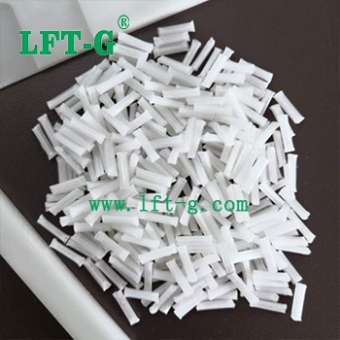
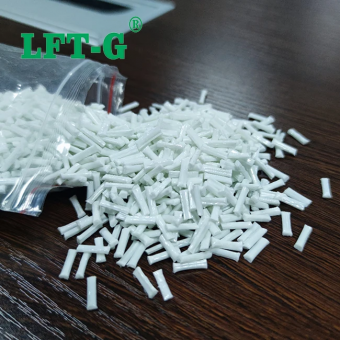
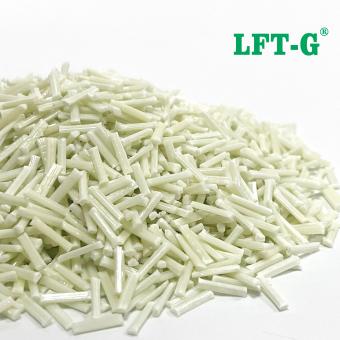
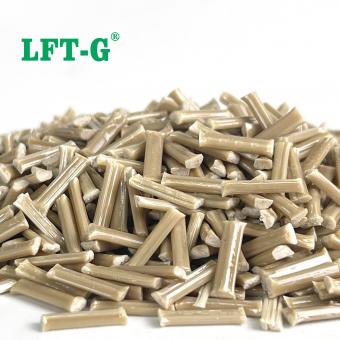
By combining carbon fiber with thermoplastic resins, manufacturers can develop Long Carbon Fiber Reinforced Thermoplastics (LCF).
Compared with unreinforced polymers, carbon fiber reinforcement can significantly improve tensile strength, stiffness, dimensional stability, and overall structural performance, while maintaining the lightweight advantages of thermoplastics.
From high-performance carbon fiber precursors to carbon fiber-reinforced compounds and finally to injection-molded components, the performance of the final product depends on many factors, including:
- Carbon fiber properties
- Polymer matrix
- Fiber content
- Fiber length
- Fiber distribution
- Processing and molding conditions
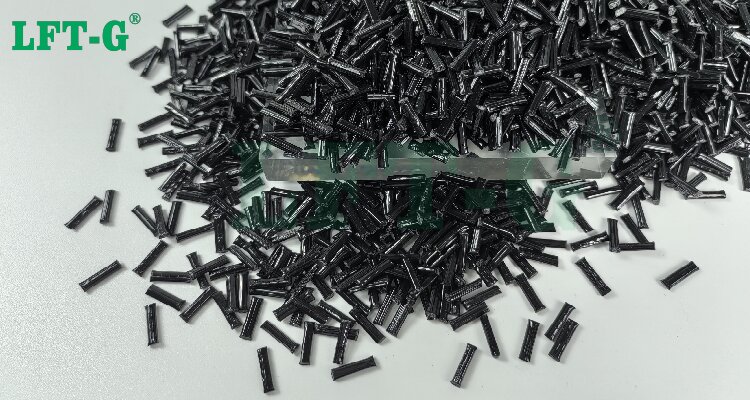
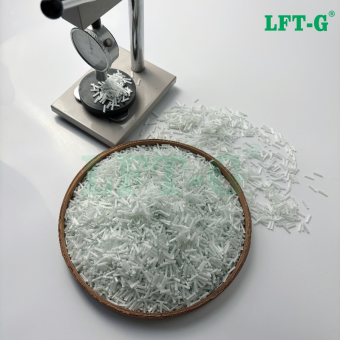
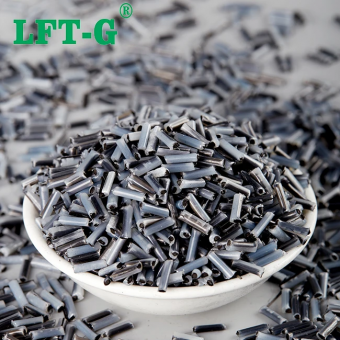
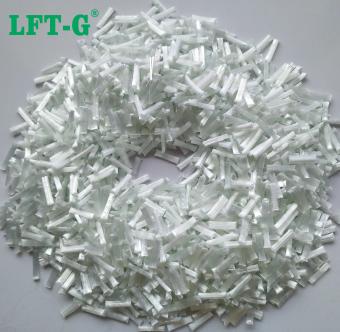
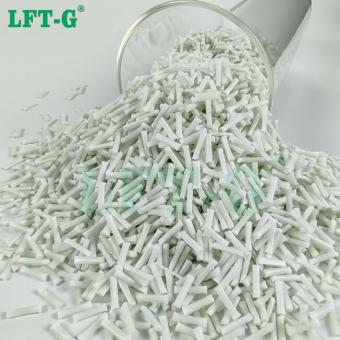
Xiamen LFT focuses on long fiber reinforced thermoplastic composites and provides long carbon fiber reinforced materials based on engineering thermoplastics such as PP, PA, PPS, PPA, and PEEK.
By combining high-performance carbon fiber with thermoplastic matrices, LFT materials help transform the potential of carbon fiber into practical solutions for automotive, new energy, industrial, aerospace, and other demanding applications.
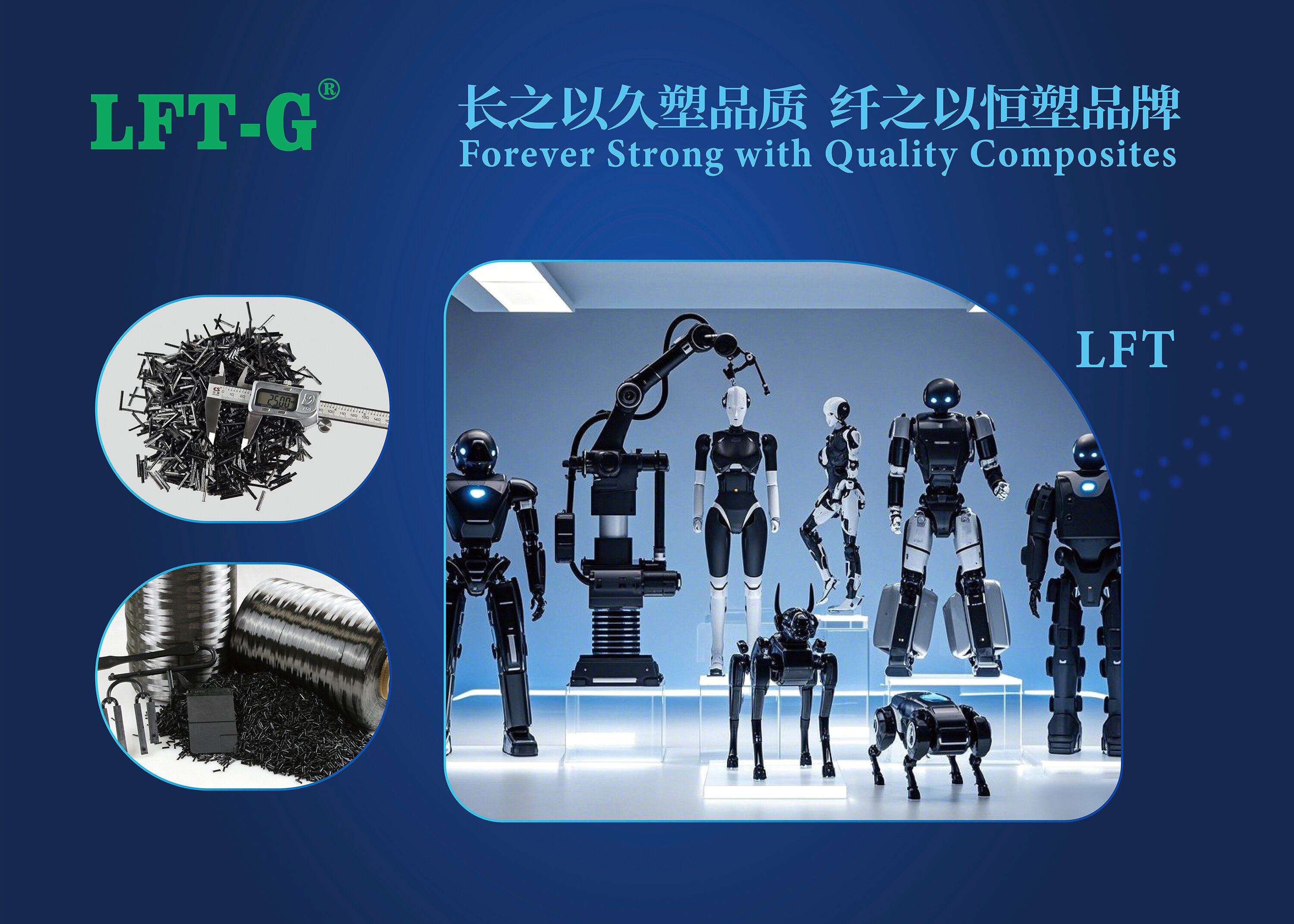
From “black gold” as a high-performance raw material to carbon fiber reinforcement inside advanced engineering plastics, carbon fiber is moving steadily toward broader industrial applications.
The true limit of a material is not only determined by how strong it is, but also by how effectively its performance can be transformed into real-world products.
That may be the real significance of high-performance carbon fiber—and one of the reasons it continues to push the boundaries of advanced manufacturing.